
How to build your first Wardley Maps
A practical guide to getting started with Wardley Mapping, avoiding common pitfalls, and sparking better strategic conversations.

Wardley Mapping is one of those topics that never fails to spark curiosity. It comes up time and time again in conversations, workshops, and strategy sessions. We cover it in depth in The Value Flywheel Effect, but it’s worth revisiting because so many people ask: “How do I actually start mapping?”
The honest answer? It’s not easy. Learning to map takes time, patience, and plenty of practice. We’ve spent close to a decade stumbling, experimenting, and refining how we use Wardley Maps. Along the way, we’ve discovered some practical approaches that make the early stages less daunting. This post is part of a short series where we’ll share what we’ve learned.
Why Wardley Mapping is a Game-Changer
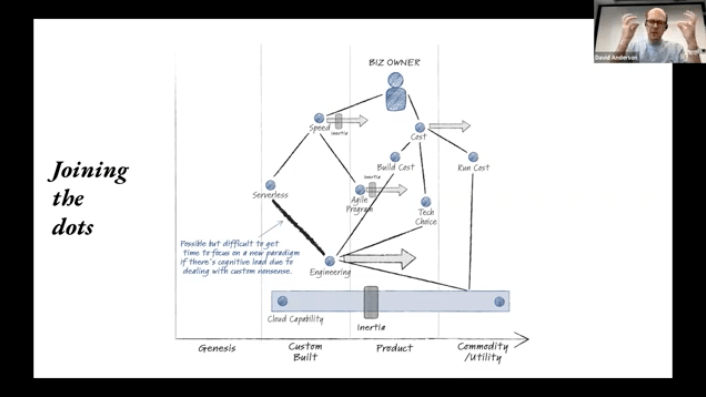
Wardley Mapping has fundamentally changed how we think about strategy. Unlike other frameworks, it doesn’t just help you make decisions—it helps you see them. It forces you to examine components, dependencies, and how things evolve.
Over time, you stop treating mapping as a tool and start adopting it as a mindset. You naturally ask:
Who are the users?
What do they need?
What’s the value chain?
Where is each component on its evolutionary journey (Genesis → Custom → Product → Commodity)?
This way of thinking clarifies complexity and sparks far richer conversations—whether you’re talking with engineers, executives, or cross-functional teams.
When to Use a Wardley Map
The triggers for mapping are varied:
Deciding priorities and next actions.
Facilitating discussions across disciplines.
Understanding a new domain, tech stack, or business context.
Accelerating onboarding by building a shared picture of “how things hang together.”
Mapping is especially powerful in collaborative settings. A value chain scribbled on a whiteboard (or Miro board) becomes a conversation starter. Experts challenge assumptions, fill in gaps, and offer perspectives you’d miss on your own. It’s not about getting the map “right”—it’s about getting people talking.
The Wardley Mapping Canvas
A breakthrough for many newcomers is Ben Mosior’s Wardley Mapping Canvas (LearnWardleyMapping.com). It provides six structured steps that guide you through the process:
Purpose – Why are we mapping? What’s the trigger? What outcome do we want?
Scope – What’s in and out of scope? Don’t map the world—stay focused.
Users – Who is the primary user? Be explicit.
User Needs – What do they need? Keep it to the essentials.
Value Chain – What dependencies exist to satisfy those needs?
Mapping – Place components on the map according to their stage of evolution.
This framework prevents teams from going too broad too quickly. Early on, our maps ballooned into unwieldy tangles of 50+ components. The canvas helps keep things lean, focused, and actionable.
Practical Tips for First-Time Mappers
Start with Purpose – Always begin by asking: Why does this project exist? You’d be surprised how often teams struggle to answer this clearly.
Narrow the Scope – Resist the temptation to “map the world.” Decide upfront what not to map.
Name Your User – Make the user concrete: “Driver,” “Customer,” “Engineer.” Ambiguity kills clarity.
Keep it Simple – Focus on one user and one or two needs to start. You can expand later.
Facilitate, Don’t Dictate – A good mapping session is collaborative. Encourage challenges and curiosity—never shut people down.
Capture Observations – Don’t just build the map. Annotate it with insights, blockers, or opportunities to revisit later.
Moving Beyond the First Map
Your first Wardley Map is rarely perfect—and that’s fine. The real value emerges in the conversations it enables and the insights it surfaces. Over time, maps evolve into living artefacts that guide decisions and help teams see where to go next.
For example, you might identify a custom-built component that should evolve into a commodity. The map sparks questions like: What’s stopping us from doing that? Skills? Tech stack? Organisational inertia? Those notes then drive the next round of strategic discussions.
Further Resources
LearnWardleyMapping.com – Ben Mosior’s site and the Wardley Mapping Canvas.
Awesome Wardley Maps – John Grant’s curated list of Wardley Mapping resources.
Simon Wardley’s original work – The deep dive into mapping fundamentals.
Final Thought
Don’t aim to build the perfect map. Aim to start a meaningful conversation. Wardley Mapping isn’t about precision—it’s about perspective. With practice, you’ll develop a new strategic lens, one that helps you cut through noise, clarify priorities, and move with confidence.